

A Vision Before Its Time
Mt. Hood Skiway Tram – In 1947, with World War II behind them, Oregonians looked to the mountains for recreation. Skiing had been gaining popularity before the war, and now the demand for the slopes was stronger than ever. A group of investors believed they could revolutionize the way skiers reached Timberline Lodge.
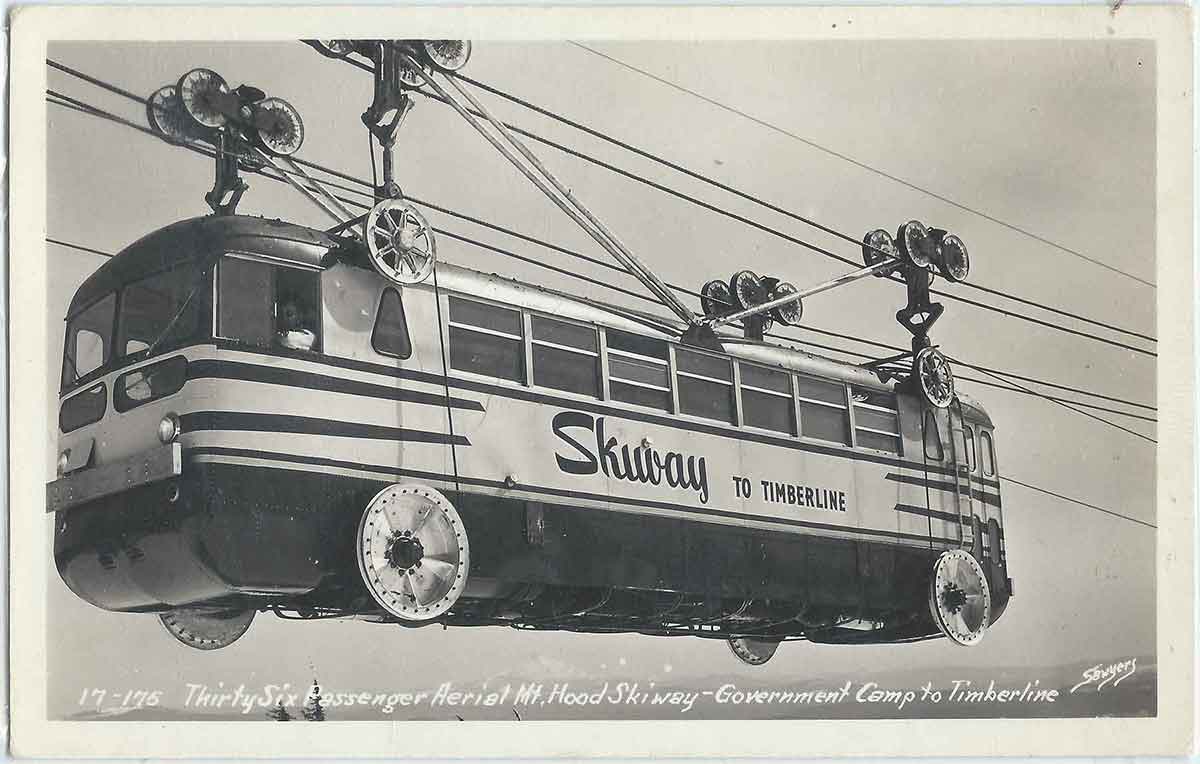
That October, Dr. J. Otto George and A. L. Greenwalt formed the Mount Hood Aerial Transportation Company. Each man held 250 shares, and together they launched an ambitious project: an aerial tramway linking Government Camp to Timberline Lodge. They called it the Skiway—pronounced “Skyway.” At its debut, it would be the longest aerial tram of its kind in the world. Popular Science even described it as “the most extraordinary of busses,” a ride above the clouds.
The Need for a Tramway
Getting to Timberline in the late 1940s was not easy. Drivers faced a rough, winding road that was often treacherous. A Timberline shuttle bus ran for fifty cents, but its schedule was limited. Hitchhiking was also common, though not dependable. For those who drove, the logistics were a hassle. Skiers usually carpooled, then skied down the Glade or Alpine Trails to Government Camp. At the end of the day, someone had to slog back up for the car.
The Skiway promised a simpler solution. Skiers could ride the tram up, spend the day on the slopes, and either return by tram or ski back to town.
An Engineering Feat
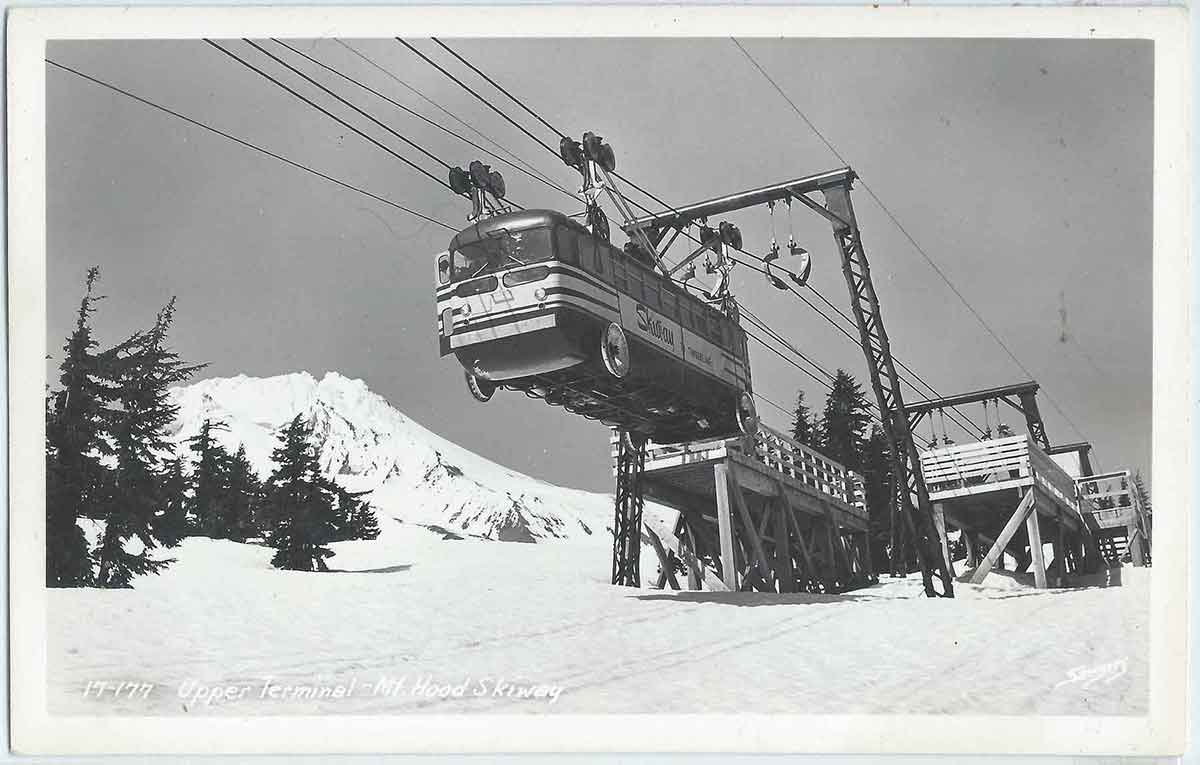
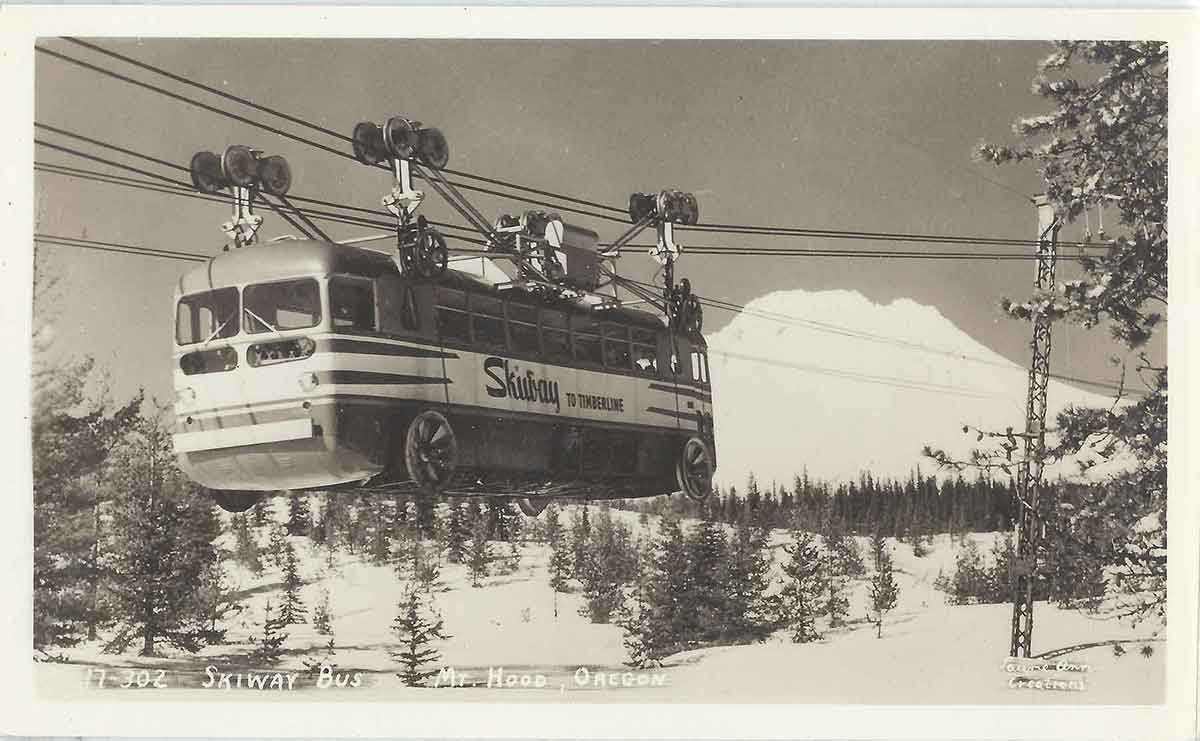
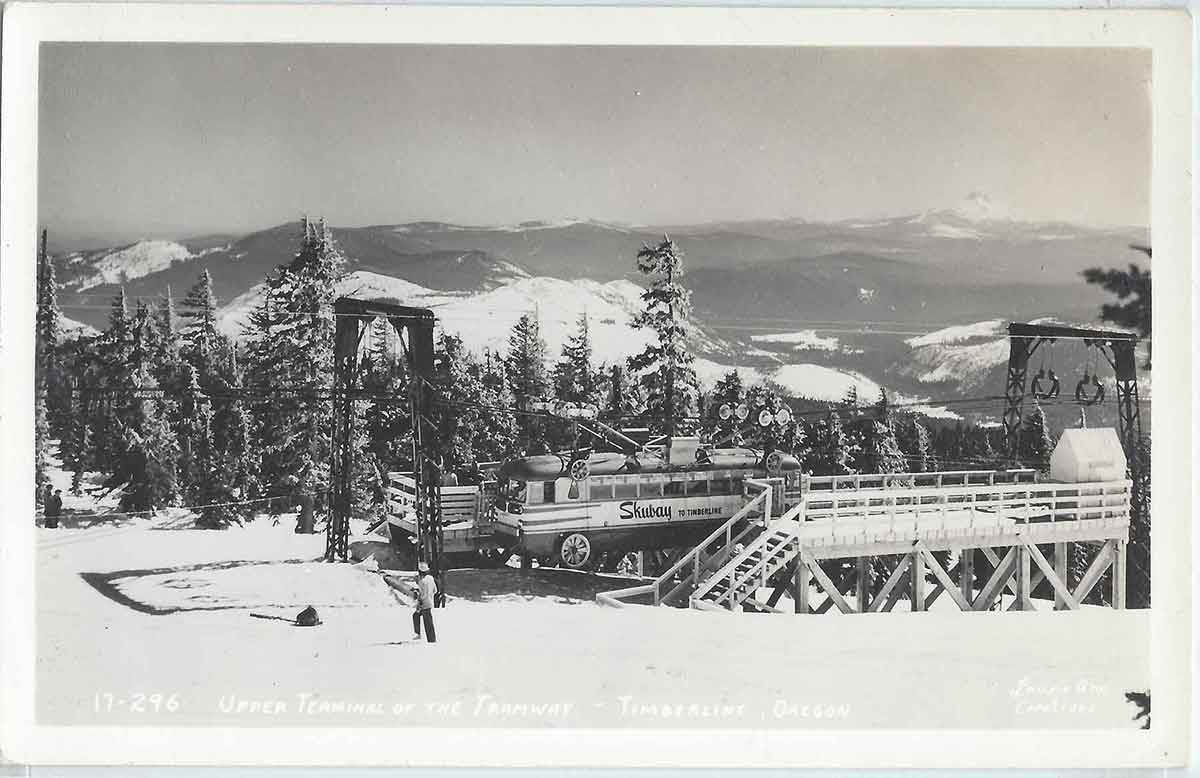
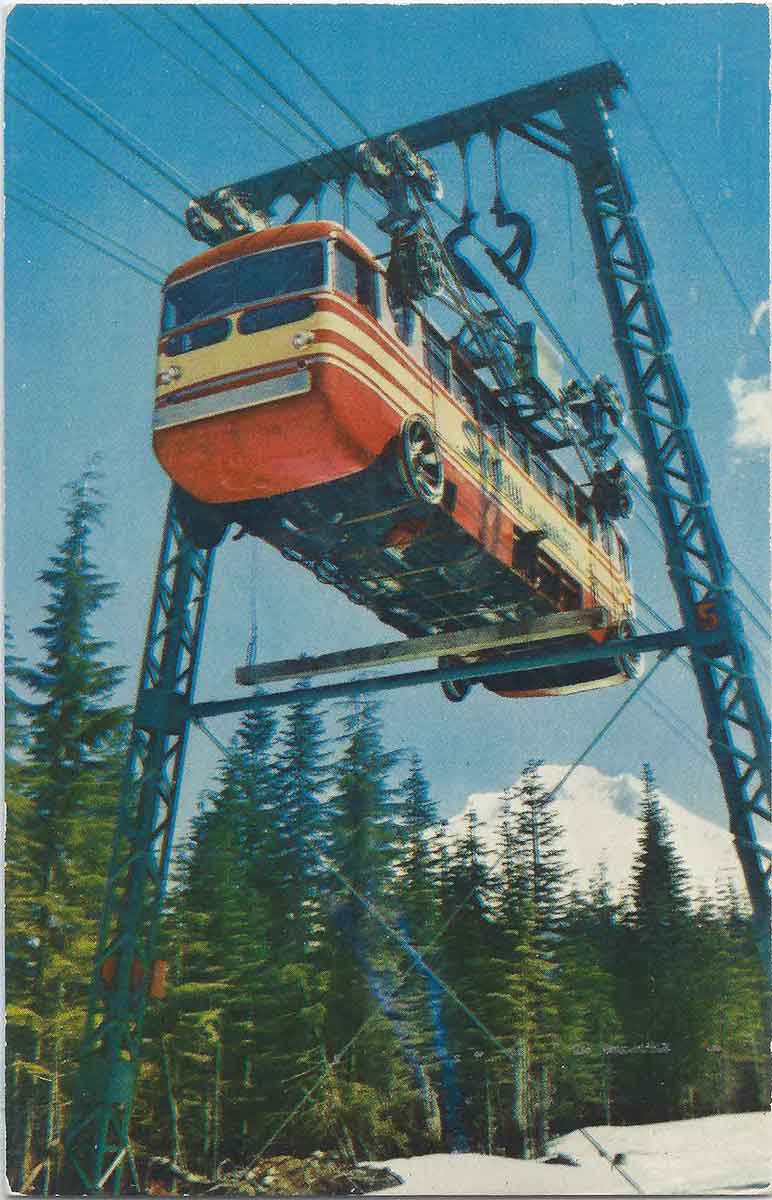
Construction began in 1948, and the design was unlike anything the mountain had seen. Engineers modified two city buses, equipping each with dual 185-horsepower engines that clamped onto a stationary 1.5-inch cable. The idea drew inspiration from logging sky hooks, but on a far larger scale. Each bus could carry 36 passengers, burning seven gallons of fuel on a round trip.

The line stretched 3.2 miles and was supported by 38 steel towers. More than twenty-five miles of cable were required to complete the system. A one-way trip took about twenty-five minutes. While impressive, the slow ride and limited capacity—fewer than 75 passengers per hour per car—would later prove fatal to the business.
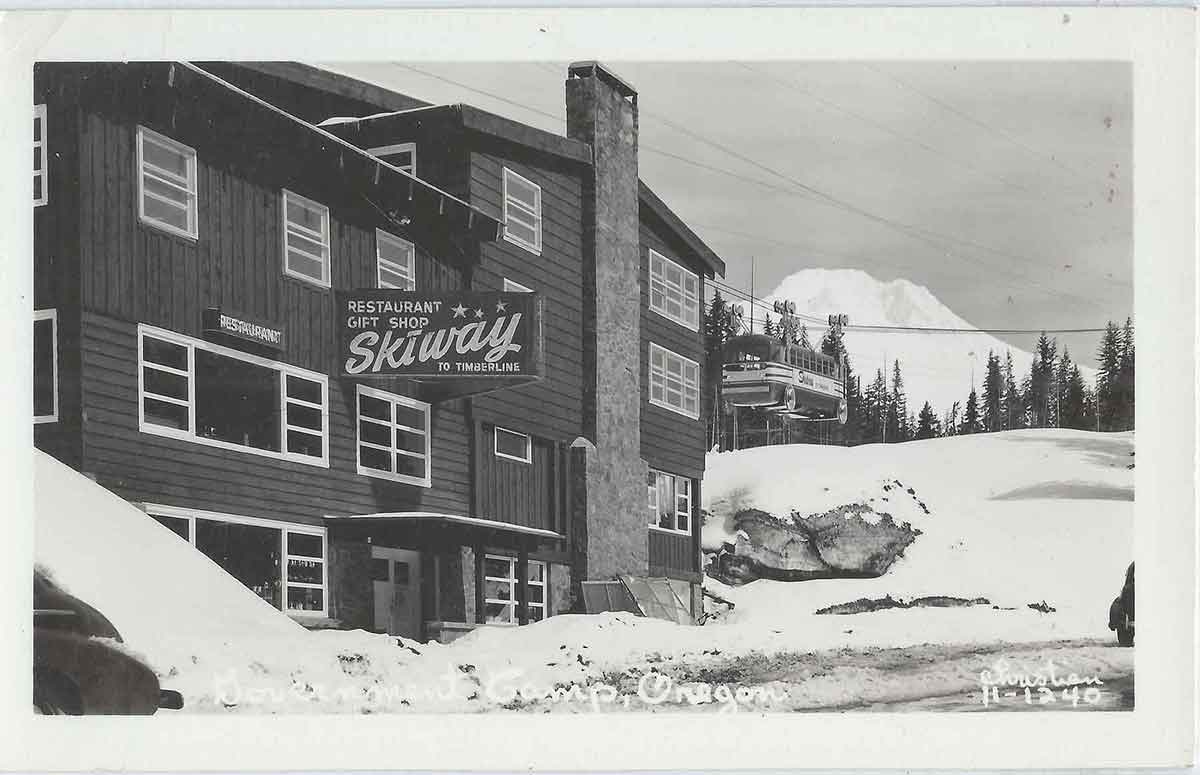
At Government Camp, a modern terminal lodge welcomed riders. The top floor held the loading platform, while the lower levels offered a restaurant, restrooms, a lounge, and a gift shop. At the upper terminal, built at the west end of Timberline Lodge, passengers could step directly onto the ski runs.
Challenges and Delays
The project faced setbacks even before it opened. By 1949 the towers and terminals stood ready, but that same year a new Timberline Road was completed. Shorter, smoother, and safer, the road undercut the Skiway’s central promise of easy access.
Winter weather also took its toll. Heavy snows in 1950 and 1951 delayed completion. The Skiway finally opened on January 3, 1951, more than a year behind schedule. The debut attracted attention and curiosity, yet the novelty quickly faded. The ride was long, the motion over each tower caused a jolt, and some board members admitted the design had been “improperly conceived.”
The Mt. Hood Skiway Tram’s Downfall
The numbers simply did not work. Driving the new road was faster and free. The Skiway charged seventy-five cents—more expensive than the fifty-cent bus. Operating costs were high, fuel consumption was steep, and passenger capacity was too low to turn a profit.
Shareholders explored redesigns, including a system of thirty or forty smaller gondolas, but hesitation and costs stalled those plans. By 1956, the Skiway had closed, and within a few years the lower terminal was sold. The buses and machinery were dismantled and auctioned off.
A Forgotten Piece of Mount Hood History
Although it lasted barely five years, the Mt. Hood Skiway remains one of the most unusual experiments in American ski history. It reflected the bold optimism of its era, when engineers and investors were eager to test big ideas.
Today, the route of the Skiway can still be seen cutting up the hillside between Government Camp and Timberline Lodge. The lower terminal building survives as Thunderhead Lodge, a quiet reminder of an audacious vision. The “most extraordinary of busses” may have disappeared, but its story continues to fascinate anyone who loves Mount Hood’s history.
Where is the old tramway car now?
I’ve heard that they were taken to the coast (Astoria) to be used as storage sheds. I also heard they they are in complete ruins, if they’re still there at all.