

Multnomah Falls and the Missoula Floods
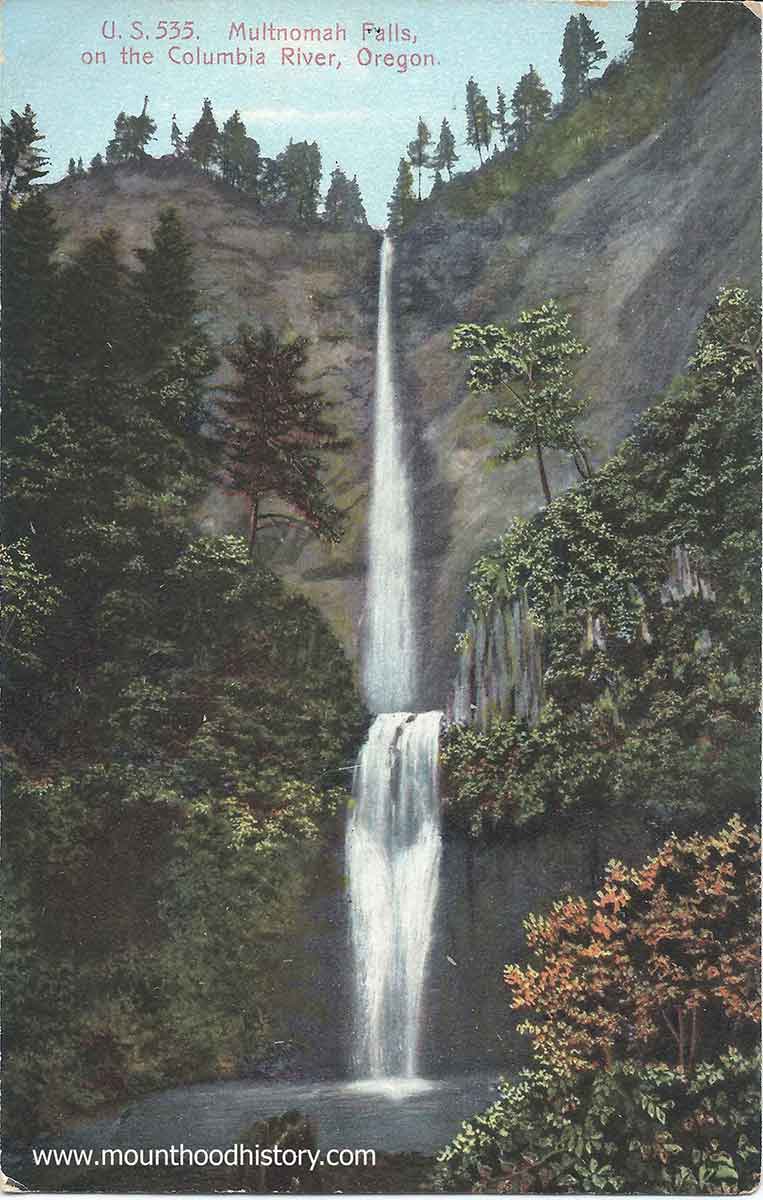
Multnomah Falls is a two-tiered waterfall located in the Columbia River Gorge just east of Portland, Oregon. The falls were shaped approximately 15,000 years ago during the cataclysmic Missoula Floods — a series of massive Ice Age floods that carved and reshaped the Columbia River Gorge.
The waterfall drops a total of 611 feet. The upper falls plunge 542 feet, followed by a lower 69-foot cascade. Multnomah Falls is the tallest year-round waterfall in Oregon and has long been one of the most recognizable natural landmarks in the Pacific Northwest.
The Legend Behind the Name
A popular late-19th-century legend tells of a young maiden from the local Multnomah tribe who sacrificed herself by leaping from the cliffs to save her people from a devastating plague. According to the story, her sacrifice pleased the Great Spirit, who ended the sickness and created a waterfall where she fell.
While the story has been repeated for generations, historians believe it likely originated from romanticized accounts written by early settlers rather than documented Indigenous oral tradition. Still, the legend remains part of Multnomah Falls history and its enduring cultural identity.
Early Railroad Tourism and the First Bridge
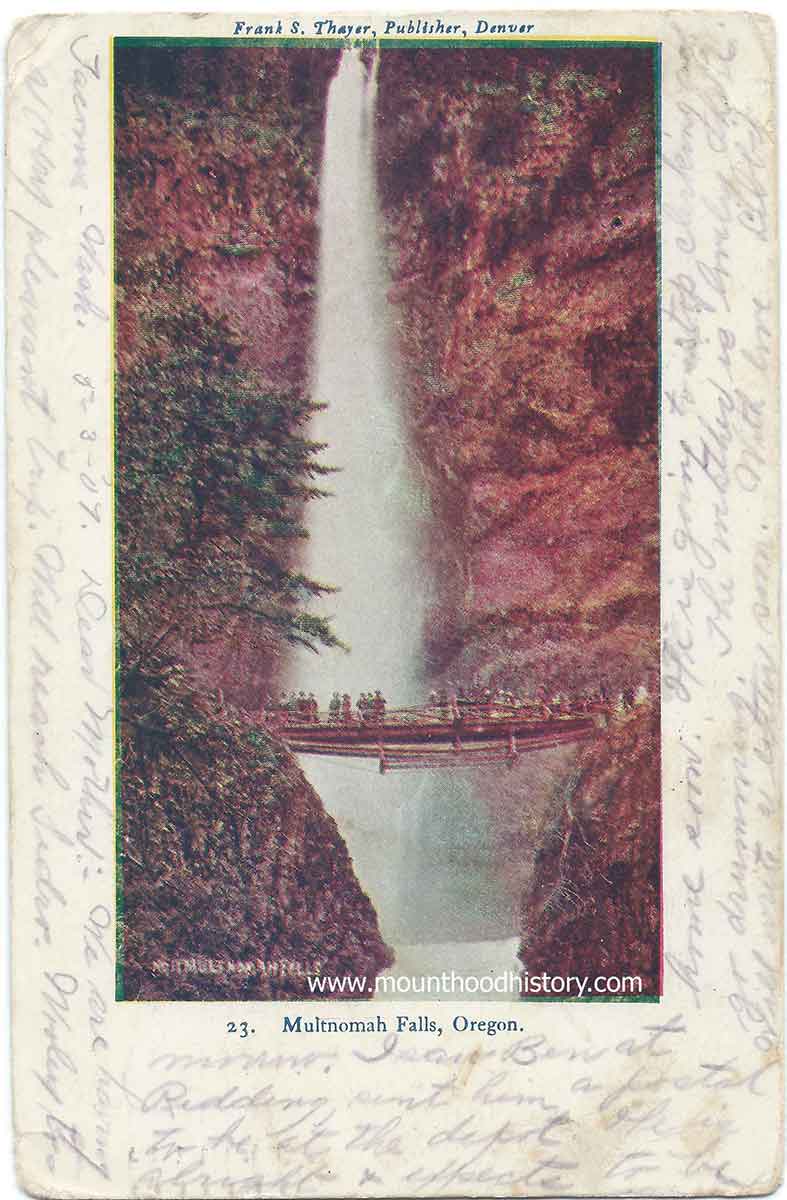
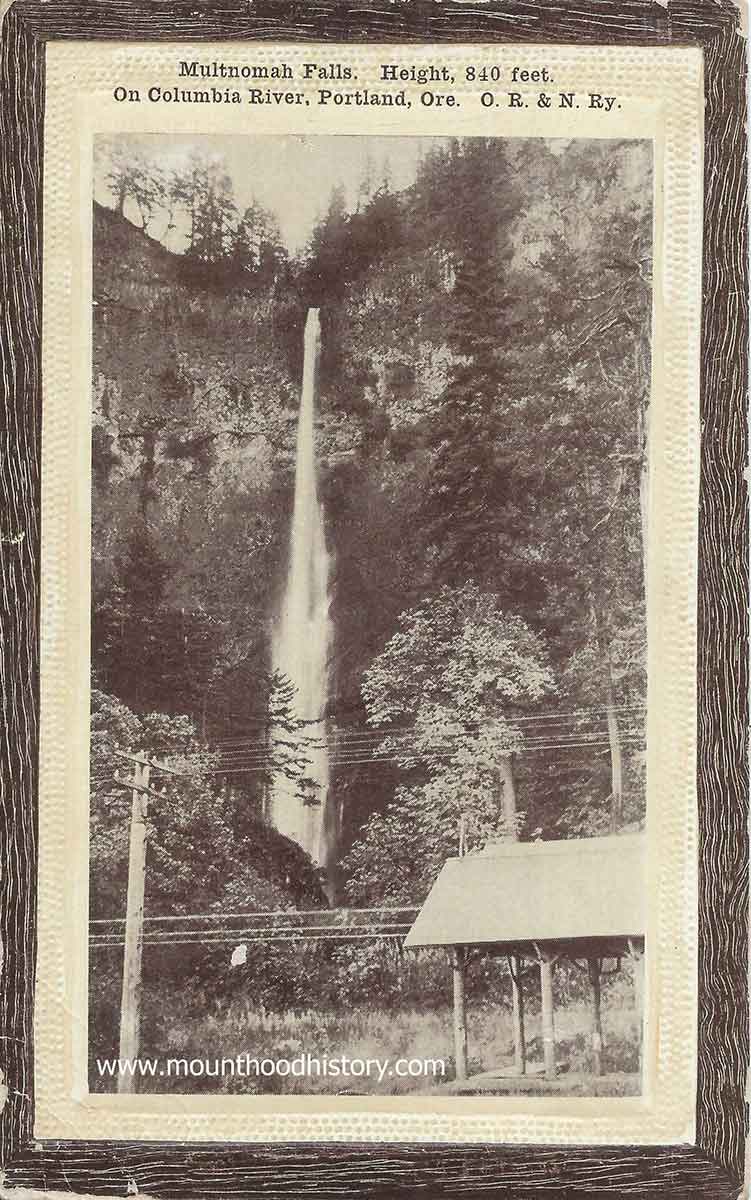
Tourism at Multnomah Falls began in earnest in the 1880s when the Oregon Railroad and Navigation Company established a train stop near the base of the falls. Visitors from Portland could step off the train and walk directly to the waterfall.
During this early period, a wooden footbridge crossed Multnomah Creek near the location of today’s Benson Bridge. The bridge allowed visitors to explore the area more closely. By the late 1890s, the structure had deteriorated and disappeared.
Even then, Multnomah Falls was becoming one of the Columbia River Gorge’s most popular destinations.
Samuel Lancaster, Larch Mountain, and a New Vision
In the early 1910s, interest in Gorge tourism was growing rapidly. Steam-powered sternwheelers and train excursions were already bringing visitors, but a new era was coming — the automobile.
Engineer Samuel C. Lancaster, who would later oversee construction of the Columbia River Highway, promoted improved trails and public access in the Gorge. He encouraged the Progressive Business Men’s Club of Portland to support development of a trail from the base of Multnomah Falls to the summit of Larch Mountain and the headwaters of Multnomah Creek.
The club raised funds, and with cooperation from the U.S. Forest Service, the trail and a fire lookout on Larch Mountain were established.
Simon Benson and the Bridge Across the Falls
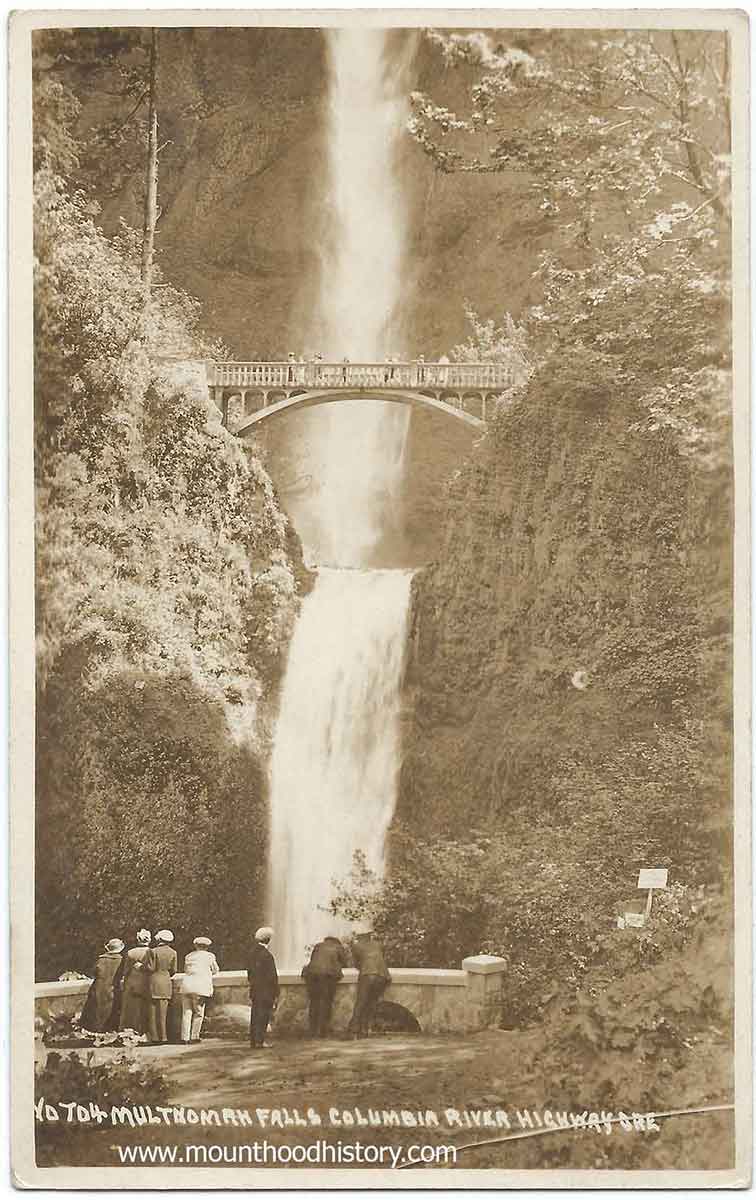
Portland businessman Simon Benson played a major role in preserving and developing Multnomah Falls. In 1914, he funded the construction of the graceful arched footbridge that now spans the lower tier of the waterfall.
Built by Italian stonemasons, the Benson Bridge provided visitors safe access across the canyon and connected the trail system climbing toward Larch Mountain. The bridge quickly became one of the defining features of Multnomah Falls.
In 1915, Benson donated approximately 1,400 acres of land, including the falls themselves, to the City of Portland to ensure permanent public access and protection.

The Lodge and the Columbia River Highway
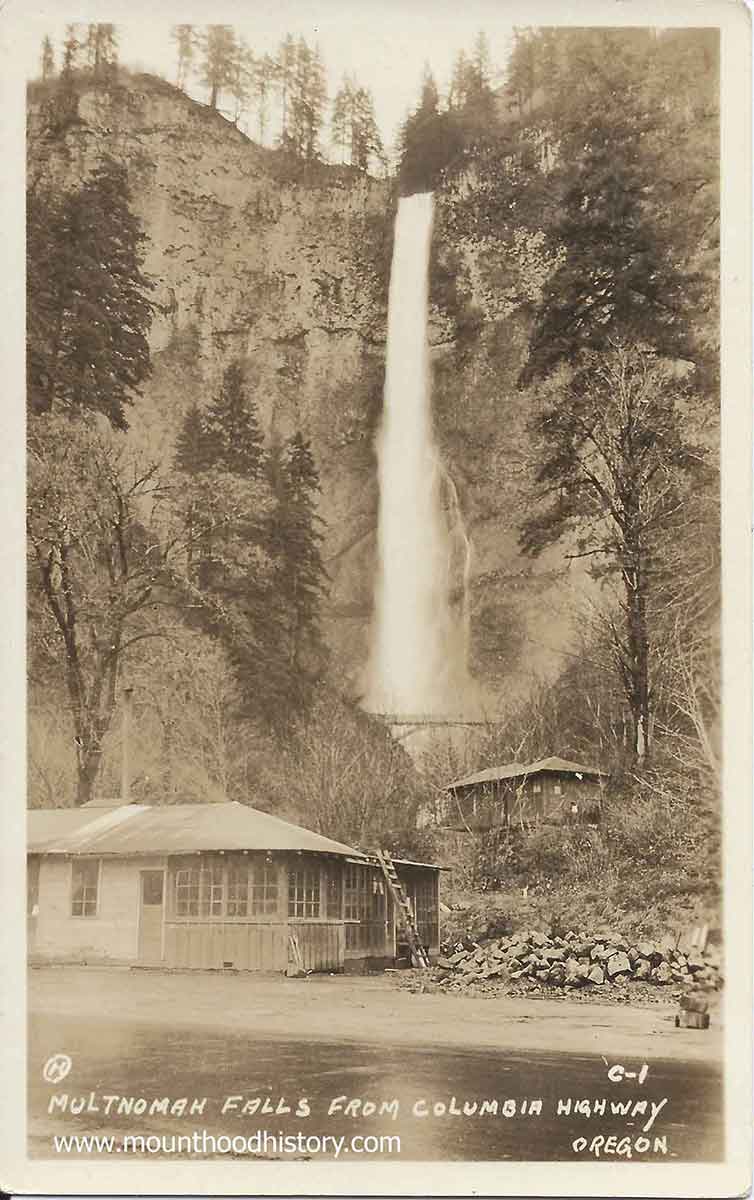
As automobile travel increased, the Columbia River Highway was dedicated in 1916 and completed in 1922. The highway transformed tourism in the Gorge, allowing Portland residents and visitors to drive directly to scenic destinations like Multnomah Falls.
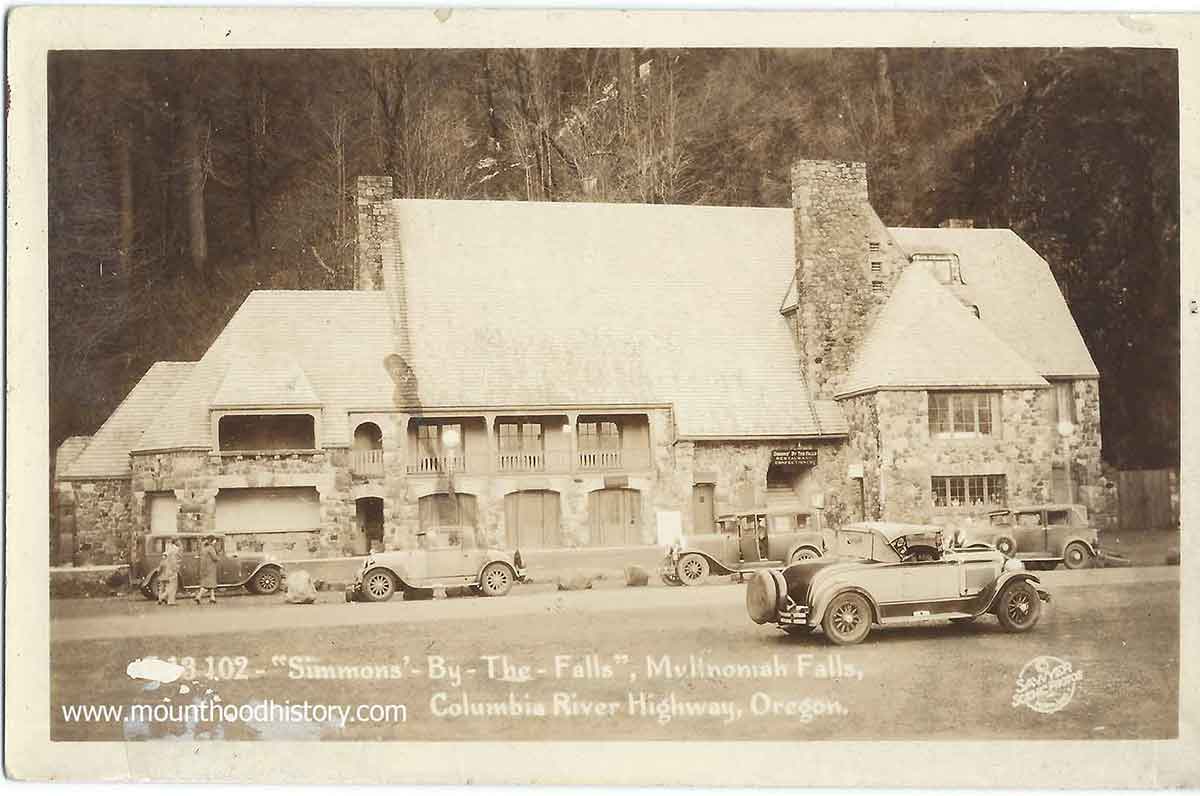
In 1925, the stone Multnomah Falls Lodge was constructed at the base of the falls, replacing the earlier railroad-era facilities. Built in a rustic style that complemented the surrounding landscape, the lodge became a centerpiece for Gorge tourism.
Today, the lodge and Benson Bridge remain central elements of Multnomah Falls history.
A Bridge That Became an Icon
More than a century after its construction, Benson Bridge still carries visitors across the mist of the lower falls. It frames photographs, anchors postcards, and provides one of the most intimate views of the waterfall.
Multnomah Falls has seen trains, sternwheelers, Model T automobiles, tour buses, and millions of visitors pass through. Through it all, the bridge has remained.
It is more than a crossing. It is part of the story.
Read More
Thank you for the history and pictures of my favorite place on Earth.
Gladly Joi. 🙂 Thank you for visiting my website.
Thanks Gary,
Are there any photos of the Italian stone masons at work, or any background on them?
Thanks,
Bill
Hi Bill. I don’t have any photos of the worker on the old highway construction, but I’m sure that the Oregon Historical Society would. That would be a great subject for an article. Thanks!
I just bought an original charcoal – graphite painting of the falls with what must be the original bridge and people standing on it. It looks to be in the 1880’s to early 1890’s period. Very excellent but no signature unless on the inside. Maybe i can send some pictures of it to this site.
Hi Mark. I’d love to see it. You can email me at gary(at)precisionartists.com
My emails could not be sent to your email so I could not send a picture. Maybe you can see the painting on my old ebay auction: https://www.ebay.com/itm/402450279170?ul_noapp=true
Man that’s cool !!!
Yep. Hard to imagine.